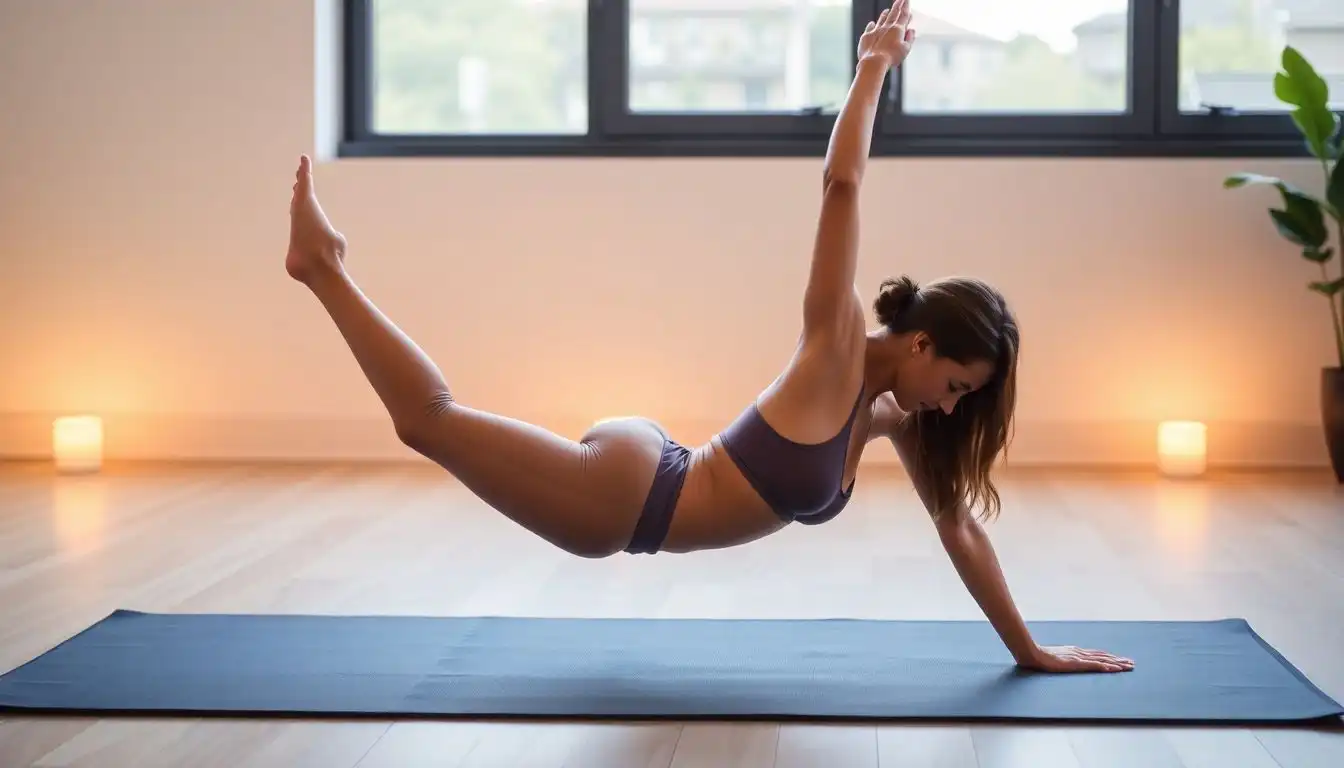
5 Bedtime Yoga Poses That Calm the Mind and Improve Sleep: Finding a way to switch off can feel like a tall order after a frantic day in the office or a long afternoon wrangling the kids. Our modern lives are packed with blue light and endless scrolling, which often leaves us staring at the ceiling long after the lights go out.
While many of us reach for a glass of red or a magnesium supplement, the most effective solution might be right on your bedroom floor. Gentle movement helps signal to the nervous system that the day is done and it is time to rest.
Integrating a short physical routine into your evening can bridge the gap between daytime chaos and deep slumber. By focusing on breath and soft stretches, you can lower your heart rate and prepare your body for a restorative night of shut-eye.
The Science of Sleeping Better in Australia
Many Aussies struggle with sleep maintenance, with recent observations suggesting that nearly half of the adult population isnt getting enough high-quality rest. High temperatures during summer and the stress of a fast-paced work culture contribute to a nation that is perpetually tired.
- Research says the 1960s and 70s accidentally produced one of the most emotionally durable generations in modern history — not through better parenting but through benign neglect that forced children to self-regulate, problem-solve, and develop emotional calluses that modern comfort has made nearly impossible to grow
- Research says the happiest people after 70 aren’t the ones who stayed active, stayed useful, or stayed relevant — they’re the ones who made peace with a version of themselves that didn’t need to be any of those things to deserve to be here – Trims NQ News
- Psychologists explain that people born in the 1950s aren’t just resilient — they’re the last generation raised with the assumption that life owed them nothing, which created a baseline expectation of hardship that inoculated them against the entitlement that erodes persistence
- Psychology says people who’ve drunk black coffee for decades often can’t remember if they ever actually liked it with cream and sugar they just know that somewhere in early adulthood they made a decision to stop needing things to be softer than they were, and the coffee was just the most visible place that showed up
- Psychology says people who reach their 60s without close friends aren’t socially deficient they’re the ones who carried everyone else’s emotional weight for so long that reciprocal friendship started to feel like a foreign concept
A bedtime routine that includes restorative yoga works by activating the parasympathetic nervous system, often called the “rest and digest” mode. This process counteracts the “fight or flight” response triggered by daily stressors like traffic on the M1 or looming deadlines.
When we move slowly and breathe deeply, we tell the brain that we are safe. This reduces the production of cortisol, the hormone that keeps us alert, and allows melatonin levels to rise naturally as the sun sets over the horizon.
“The physiological transition from alertness to sleep requires a deliberate reduction in sensory input and physical tension. By engaging in slow, rhythmic movements, individuals can effectively regulate their autonomic nervous system, leading to quicker sleep onset and fewer midnight awakenings.”
Creating Your Evening Sanctuary
Before you start your poses, it is important to set the scene to ensure you aren’t interrupted. In an Australian household, this might mean turning off the evaporative cooling to a quiet setting or dimming the lights in your terrace or bungalow.
- Research says the 1960s and 70s accidentally produced one of the most emotionally durable generations in modern history — not through better parenting but through benign neglect that forced children to self-regulate, problem-solve, and develop emotional calluses that modern comfort has made nearly impossible to grow
- Research says the happiest people after 70 aren’t the ones who stayed active, stayed useful, or stayed relevant — they’re the ones who made peace with a version of themselves that didn’t need to be any of those things to deserve to be here – Trims NQ News
- Psychologists explain that people born in the 1950s aren’t just resilient — they’re the last generation raised with the assumption that life owed them nothing, which created a baseline expectation of hardship that inoculated them against the entitlement that erodes persistence
- Psychology says people who’ve drunk black coffee for decades often can’t remember if they ever actually liked it with cream and sugar they just know that somewhere in early adulthood they made a decision to stop needing things to be softer than they were, and the coffee was just the most visible place that showed up
- Psychology says people who reach their 60s without close friends aren’t socially deficient they’re the ones who carried everyone else’s emotional weight for so long that reciprocal friendship started to feel like a foreign concept
Ensure your space is comfortable by laying down a soft mat or even performing these movements on your rug. Wear loose, breathable cotton pyjamas to help manage your body temperature, especially if you are dealing with a humid night in Queensland or a dry heat in Perth.
The goal is not to get a workout or a deep sweat. Instead, imagine your body is like a slow-moving river, transitioning effortlessly from one shape to another without any strain or force.
| Sleep Factor | Impact of Yoga | Estimated Improvement |
|---|---|---|
| Cortisol Levels | Decreases with deep breathing | Significantly Reduced |
| Heart Rate | Lowers through gentle movement | 10-15% Decrease |
| Mind Wandering | Focuses thoughts on the body | Higher Mental Clarity |
| Muscle Tension | Releases physical knots | Noticeable Relaxation |
1. Legs Up the Wall (Viparita Karani)
This is arguably the most famous pose for relaxation because it feels incredibly passive and grounding. It involves scooting your hips as close to a wall as possible and resting your legs vertically against it.
This inverted position helps with lymphatic drainage and takes the pressure off your feet, which is a godsend if you have been standing all day at a retail job or a building site. It encourages blood to flow back toward the heart and promotes a sense of deep stillness.
- Research says the 1960s and 70s accidentally produced one of the most emotionally durable generations in modern history — not through better parenting but through benign neglect that forced children to self-regulate, problem-solve, and develop emotional calluses that modern comfort has made nearly impossible to grow
- Research says the happiest people after 70 aren’t the ones who stayed active, stayed useful, or stayed relevant — they’re the ones who made peace with a version of themselves that didn’t need to be any of those things to deserve to be here – Trims NQ News
- Psychologists explain that people born in the 1950s aren’t just resilient — they’re the last generation raised with the assumption that life owed them nothing, which created a baseline expectation of hardship that inoculated them against the entitlement that erodes persistence
- Psychology says people who’ve drunk black coffee for decades often can’t remember if they ever actually liked it with cream and sugar they just know that somewhere in early adulthood they made a decision to stop needing things to be softer than they were, and the coffee was just the most visible place that showed up
- Psychology says people who reach their 60s without close friends aren’t socially deficient they’re the ones who carried everyone else’s emotional weight for so long that reciprocal friendship started to feel like a foreign concept
Hold this pose for at least five minutes while closing your eyes. You might feel a slight tingling in your toes, which is perfectly normal as the circulation shifts. Focus on making your belly rise and fall with every breath you take.
2. Child’s Pose (Balasana)
A staple of any yoga practice, this pose is the ultimate symbol of surrender. Kneel on your floor, sit back on your heels, and fold forward until your forehead touches the ground. Extend your arms out in front or keep them by your sides.
This shape allows the back muscles to widen and release, specifically targeting the lower lumbar area. It creates a private cocoon where the outside world disappears, helping you to disengage from the noise of Metropolitan Melbourne or the busy suburbs.
If your knees feel a bit stiff, place a pillow between your thighs and calves. This extra support can make the pose feel even more decadent and relaxing, allowing you to stay in the position for longer without any discomfort.
- Research says the 1960s and 70s accidentally produced one of the most emotionally durable generations in modern history — not through better parenting but through benign neglect that forced children to self-regulate, problem-solve, and develop emotional calluses that modern comfort has made nearly impossible to grow
- Research says the happiest people after 70 aren’t the ones who stayed active, stayed useful, or stayed relevant — they’re the ones who made peace with a version of themselves that didn’t need to be any of those things to deserve to be here – Trims NQ News
- Psychologists explain that people born in the 1950s aren’t just resilient — they’re the last generation raised with the assumption that life owed them nothing, which created a baseline expectation of hardship that inoculated them against the entitlement that erodes persistence
- Psychology says people who’ve drunk black coffee for decades often can’t remember if they ever actually liked it with cream and sugar they just know that somewhere in early adulthood they made a decision to stop needing things to be softer than they were, and the coffee was just the most visible place that showed up
- Psychology says people who reach their 60s without close friends aren’t socially deficient they’re the ones who carried everyone else’s emotional weight for so long that reciprocal friendship started to feel like a foreign concept
“The physical sensation of grounding the forehead against a firm surface stimulates the vagus nerve. This connection is vital for biological relaxation, as it helps the heart rate to steady and the mind to settle into a meditative state.”
3. Reclined Butterfly (Supta Baddha Konasana)
Many of us carry our daily stresses in our hips, leading to tightness that can make find a comfortable sleeping position difficult. Reclined Butterfly involves lying on your back with the soles of your feet together and your knees falling open to the sides.
If the stretch feels too intense, place a couple of thick cushions under your outer thighs for support. This pose opens the inner groin and pelvic region, which often stays braced throughout the day while we sit in office chairs or drive our cars.
Rest one hand on your heart and the other on your belly. Feel the warmth of your palms and notice how your body naturally starts to soften into the floor. This posture is excellent for relieving physical anxiety and preparing for a night of stillness.
- Research says the 1960s and 70s accidentally produced one of the most emotionally durable generations in modern history — not through better parenting but through benign neglect that forced children to self-regulate, problem-solve, and develop emotional calluses that modern comfort has made nearly impossible to grow
- Research says the happiest people after 70 aren’t the ones who stayed active, stayed useful, or stayed relevant — they’re the ones who made peace with a version of themselves that didn’t need to be any of those things to deserve to be here – Trims NQ News
- Psychologists explain that people born in the 1950s aren’t just resilient — they’re the last generation raised with the assumption that life owed them nothing, which created a baseline expectation of hardship that inoculated them against the entitlement that erodes persistence
- Psychology says people who’ve drunk black coffee for decades often can’t remember if they ever actually liked it with cream and sugar they just know that somewhere in early adulthood they made a decision to stop needing things to be softer than they were, and the coffee was just the most visible place that showed up
- Psychology says people who reach their 60s without close friends aren’t socially deficient they’re the ones who carried everyone else’s emotional weight for so long that reciprocal friendship started to feel like a foreign concept
4. Seated Forward Fold (Paschimottanasana)
While often seen as a flexibility challenge, the bedtime version of this pose should be soft and rounded. Sit with your legs extended in front of you and gently lean forward over your thighs. You don’t need to touch your toes; resting your hands on your shins is plenty.
The forward fold is a cooling posture that helps to quiet the brain. Because your gaze is directed inward toward your own body, it naturally reduces visual stimulation and encourages a sense of introspection.
Try to keep your neck relaxed so your head hangs heavy. Each time you exhale, imagine you are letting go of a specific worry from your day, letting it slide off your back and onto the floor behind you.
5. Reclined Spinal Twist (Supta Matsyendrasana)
Twisting the body at the end of the day is like wringing out a wet sponge. It helps to neutralise the spine and can relieve minor backaches that occur from slouching at a desk or lifting heavy grocery bags.
- Research says the 1960s and 70s accidentally produced one of the most emotionally durable generations in modern history — not through better parenting but through benign neglect that forced children to self-regulate, problem-solve, and develop emotional calluses that modern comfort has made nearly impossible to grow
- Research says the happiest people after 70 aren’t the ones who stayed active, stayed useful, or stayed relevant — they’re the ones who made peace with a version of themselves that didn’t need to be any of those things to deserve to be here – Trims NQ News
- Psychologists explain that people born in the 1950s aren’t just resilient — they’re the last generation raised with the assumption that life owed them nothing, which created a baseline expectation of hardship that inoculated them against the entitlement that erodes persistence
- Psychology says people who’ve drunk black coffee for decades often can’t remember if they ever actually liked it with cream and sugar they just know that somewhere in early adulthood they made a decision to stop needing things to be softer than they were, and the coffee was just the most visible place that showed up
- Psychology says people who reach their 60s without close friends aren’t socially deficient they’re the ones who carried everyone else’s emotional weight for so long that reciprocal friendship started to feel like a foreign concept
Lying on your back, bring your knees to your chest and then let them drop slowly to one side. Keep your shoulders flat on the ground and turn your head in the opposite direction for a complete whole-body release.
Spend a minute or two on each side, breathing into the side of your ribs. This movement helps to aid digestion and releases any remaining tension in the torso, making it much easier to drift off without feeling bloated or restless.
“Spinal rotations act as a reset button for the central nervous system. By gently stretching the connective tissues around the vertebrae, the body can release physical blockages that might otherwise manifest as tossing and turning during the night.”
Establishing a Consistent Routine
The key to seeing real results in your sleep quality is consistency. You don’t need to spend an hour on these poses; even ten minutes before you climb under your doona can make a world of difference.
- Research says the 1960s and 70s accidentally produced one of the most emotionally durable generations in modern history — not through better parenting but through benign neglect that forced children to self-regulate, problem-solve, and develop emotional calluses that modern comfort has made nearly impossible to grow
- Research says the happiest people after 70 aren’t the ones who stayed active, stayed useful, or stayed relevant — they’re the ones who made peace with a version of themselves that didn’t need to be any of those things to deserve to be here – Trims NQ News
- Psychologists explain that people born in the 1950s aren’t just resilient — they’re the last generation raised with the assumption that life owed them nothing, which created a baseline expectation of hardship that inoculated them against the entitlement that erodes persistence
- Psychology says people who’ve drunk black coffee for decades often can’t remember if they ever actually liked it with cream and sugar they just know that somewhere in early adulthood they made a decision to stop needing things to be softer than they were, and the coffee was just the most visible place that showed up
- Psychology says people who reach their 60s without close friends aren’t socially deficient they’re the ones who carried everyone else’s emotional weight for so long that reciprocal friendship started to feel like a foreign concept
Avoid looking at your phone immediately after your yoga. The blue light can undo all the good work you’ve just done by tricking your brain into thinking it is daytime. Instead, transition directly from your mat to your bed.
If you find your mind racing while you are in these poses, don’t be hard on yourself. Simply acknowledge the thought and bring your focus back to the sensation of the air entering your lungs. Over time, this becomes a powerful habit that signals to your body exactly when it is time to clock off.
Sustainable Sleep Habits for the Long Haul
Yoga is a fantastic tool, but it works best when paired with a healthy environment. Make sure your bedroom is cool, dark, and quiet. In the height of an Australian summer, using a fan to circulate air can provide the white noise and temperature drop needed for deeper rest.
Limit your caffeine intake in the afternoon, swapping that late-day flat white for a herbal tea like chamomile or peppermint. These small changes, combined with your new yoga routine, create a holistic approach to wellness.
- Research says the 1960s and 70s accidentally produced one of the most emotionally durable generations in modern history — not through better parenting but through benign neglect that forced children to self-regulate, problem-solve, and develop emotional calluses that modern comfort has made nearly impossible to grow
- Research says the happiest people after 70 aren’t the ones who stayed active, stayed useful, or stayed relevant — they’re the ones who made peace with a version of themselves that didn’t need to be any of those things to deserve to be here – Trims NQ News
- Psychologists explain that people born in the 1950s aren’t just resilient — they’re the last generation raised with the assumption that life owed them nothing, which created a baseline expectation of hardship that inoculated them against the entitlement that erodes persistence
- Psychology says people who’ve drunk black coffee for decades often can’t remember if they ever actually liked it with cream and sugar they just know that somewhere in early adulthood they made a decision to stop needing things to be softer than they were, and the coffee was just the most visible place that showed up
- Psychology says people who reach their 60s without close friends aren’t socially deficient they’re the ones who carried everyone else’s emotional weight for so long that reciprocal friendship started to feel like a foreign concept
Better sleep leads to better moods, improved focus at work, and more energy for the things you love, whether that is a weekend surf or a backyard barbecue with friends. Taking the time to stretch tonight is an investment in how you will feel tomorrow.
FAQs – 5 Bedtime Yoga Poses That Calm the Mind and Improve Sleep
How long should I hold each yoga pose?
Aim to stay in each position for about one to three minutes. If a pose feels particularly good, you can stay longer, provided you don’t feel any sharp pain or intense discomfort.
Do I need a professional yoga mat to do this?
No, you can easily use a thick towel or a soft carpeted floor. Some people even prefer to do these gentle stretches directly on their mattress before they pull up the covers.
Is it okay to do these poses after a big dinner?
It is usually best to wait about thirty minutes after a heavy meal before doing any twists or forward folds. This gives your digestion a chance to settle and prevents any discomfort while moving.
- Research says the 1960s and 70s accidentally produced one of the most emotionally durable generations in modern history — not through better parenting but through benign neglect that forced children to self-regulate, problem-solve, and develop emotional calluses that modern comfort has made nearly impossible to grow
- Research says the happiest people after 70 aren’t the ones who stayed active, stayed useful, or stayed relevant — they’re the ones who made peace with a version of themselves that didn’t need to be any of those things to deserve to be here – Trims NQ News
- Psychologists explain that people born in the 1950s aren’t just resilient — they’re the last generation raised with the assumption that life owed them nothing, which created a baseline expectation of hardship that inoculated them against the entitlement that erodes persistence
- Psychology says people who’ve drunk black coffee for decades often can’t remember if they ever actually liked it with cream and sugar they just know that somewhere in early adulthood they made a decision to stop needing things to be softer than they were, and the coffee was just the most visible place that showed up
- Psychology says people who reach their 60s without close friends aren’t socially deficient they’re the ones who carried everyone else’s emotional weight for so long that reciprocal friendship started to feel like a foreign concept
Will this help if I have chronic insomnia?
While yoga is a great tool for relaxation, long-term sleep issues should also be discussed with a healthcare professional. However, most people find that regular gentle movement significantly reduces the time it takes to fall asleep.
What if I am not flexible enough to do these shapes?
Flexibility is not required for bedtime yoga. Use pillows, folded blankets, or cushions to support your body so you can relax completely without feeling like you are straining your muscles.