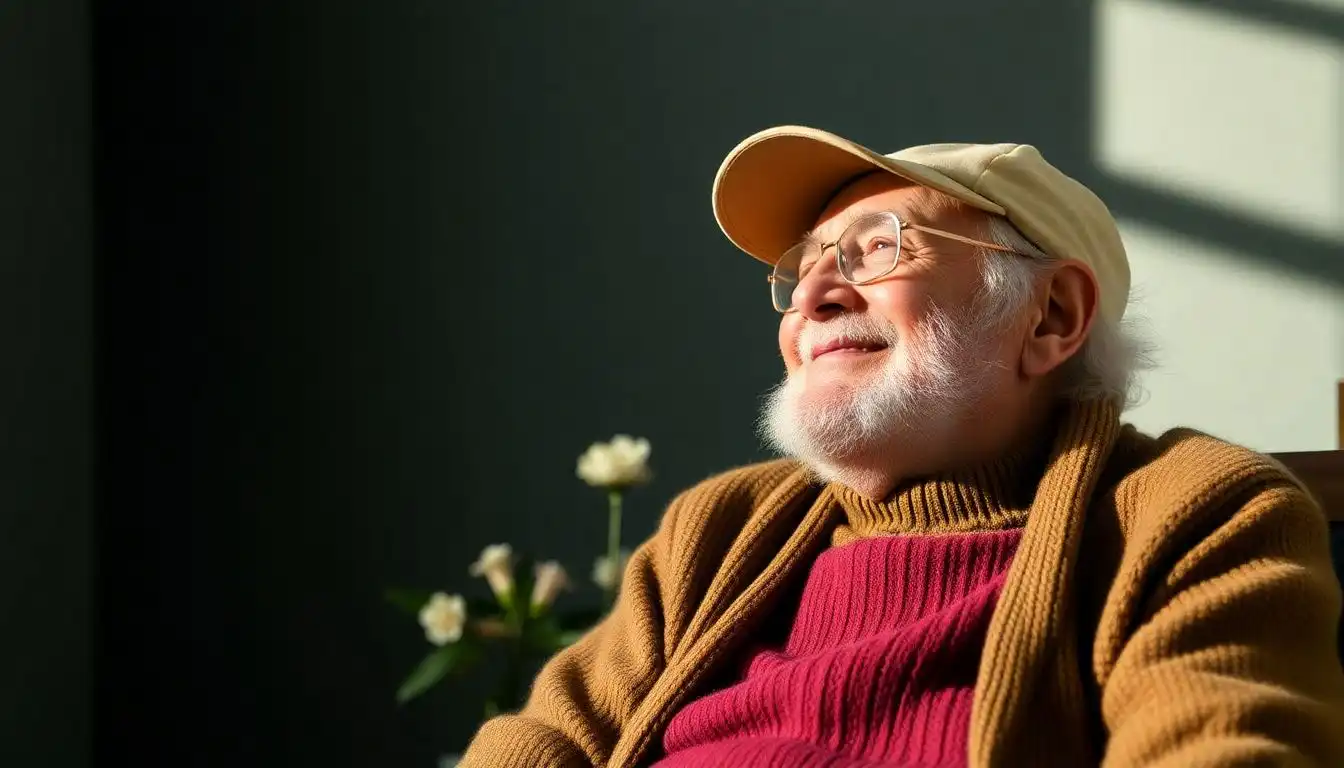
The happiest people after 70: Choosing to let go of the pressure to remain physically active, socially useful, or professionally relevant is the secret to true contentment. Rather than fighting the natural transitions of aging, those who find the most joy are the individuals who accept themselves exactly as they are.
This shift in perspective suggests that happiness in later life is not earned through achievements or staying busy. It is found in the quiet realization that your worth is not tied to your productivity or your utility to others.
Recent observations into aging have highlighted a fascinating trend among seniors. While society often praises those who “stay young” by keeping a packed schedule, the highest levels of life satisfaction actually belong to those who have embraced a slower, more self-accepted pace of life.
Redefining the Golden Years
For decades, the cultural narrative around aging has focused on “fighting back” against the clock. We are told to stay fit, volunteer for every committee, and keep our minds sharp with endless puzzles to prove we still matter.
- Psychologists explain that people born in the 1950s aren’t just resilient — they’re the last generation raised with the assumption that life owed them nothing, which created a baseline expectation of hardship that inoculated them against the entitlement that erodes persistence
- Research says the 1960s and 70s accidentally produced one of the most emotionally durable generations in modern history — not through better parenting but through benign neglect that forced children to self-regulate, problem-solve, and develop emotional calluses that modern comfort has made nearly impossible to grow
- Psychology says people who reach their 60s without close friends aren’t socially deficient they’re the ones who carried everyone else’s emotional weight for so long that reciprocal friendship started to feel like a foreign concept
- Psychology Says People Who Say “Please” And “Thank You” Without Thinking Twice Usually Display These 7 Deeply Rooted Qualities
However, a different picture is emerging. The pressure to feel useful can become a burden that prevents genuine relaxation. When people reach their seventies, the constant need to justify their existence through action often fades, replaced by a much deeper sense of peace.
This peace comes from stepping off the treadmill of performance. It is the transition from “doing” to “being.” Those who succeed in this transition report feeling a weight lifted off their shoulders that they had been carrying since early adulthood.
The Myth of Constant Productivity
Our modern world equates value with output. We are taught from a young age that to be a “good” person, we must be contributing to the economy or the community. This mindset is hard to shake, even after retirement.
Many retirees find themselves anxious if they aren’t filling their calendars. They fear that losing their “usefulness” means losing their identity. Yet, the happiest individuals are those who realize that identity is not a job title or a list of hobbies.
- Psychologists explain that people born in the 1950s aren’t just resilient — they’re the last generation raised with the assumption that life owed them nothing, which created a baseline expectation of hardship that inoculated them against the entitlement that erodes persistence
- Research says the 1960s and 70s accidentally produced one of the most emotionally durable generations in modern history — not through better parenting but through benign neglect that forced children to self-regulate, problem-solve, and develop emotional calluses that modern comfort has made nearly impossible to grow
- Psychology says people who reach their 60s without close friends aren’t socially deficient they’re the ones who carried everyone else’s emotional weight for so long that reciprocal friendship started to feel like a foreign concept
- Psychology Says People Who Say “Please” And “Thank You” Without Thinking Twice Usually Display These 7 Deeply Rooted Qualities
By letting go of the need to be useful, seniors open up space for authentic experiences. They no longer do things because they “should,” but because they genuinely want to, or they simply enjoy the luxury of doing nothing at all.
“True emotional freedom in later life occurs when an individual stops treating their time as a resource to be spent and starts treating it as a gift to be inhabited. The need to prove one’s worth to the world is a young person’s game.”
Making Peace with the Physical Self
The drive to stay active is often driven by a fear of decline rather than a love of movement. While health is important, the obsession with maintaining a youthful physique can lead to frustration as the body naturally slows down.
The happiest septuagenarians are those who make peace with their physical limitations. They don’t see a slower walk or a need for more rest as a failure. Instead, they view it as a new rhythm of life that allows for more observation and reflection.
- Psychologists explain that people born in the 1950s aren’t just resilient — they’re the last generation raised with the assumption that life owed them nothing, which created a baseline expectation of hardship that inoculated them against the entitlement that erodes persistence
- Research says the 1960s and 70s accidentally produced one of the most emotionally durable generations in modern history — not through better parenting but through benign neglect that forced children to self-regulate, problem-solve, and develop emotional calluses that modern comfort has made nearly impossible to grow
- Psychology says people who reach their 60s without close friends aren’t socially deficient they’re the ones who carried everyone else’s emotional weight for so long that reciprocal friendship started to feel like a foreign concept
- Psychology Says People Who Say “Please” And “Thank You” Without Thinking Twice Usually Display These 7 Deeply Rooted Qualities
Acceptance of the physical self means no longer competing with the person you were at forty. It involves a compassionate understanding that the body has served you well and deserves to rest without being judged for its lack of speed or strength.
Relevance Versus Connection
In a digital, fast-paced world, staying “relevant” is often code for keeping up with trends. Many seniors feel a sense of FOMO (fear of missing out) or a fear of being left behind by technology and cultural shifts.
However, relevance is a fickle metric for happiness. Those who prioritize deep, simple connections over broad social relevance tend to be much more satisfied. They focus on the quality of their immediate circle rather than their status in the wider world.
Being “out of the loop” can actually be a form of liberation. It allows for a focus on timeless truths and personal relationships that provide much more sustenance than staying current with every passing news cycle or social media trend.
- Psychologists explain that people born in the 1950s aren’t just resilient — they’re the last generation raised with the assumption that life owed them nothing, which created a baseline expectation of hardship that inoculated them against the entitlement that erodes persistence
- Research says the 1960s and 70s accidentally produced one of the most emotionally durable generations in modern history — not through better parenting but through benign neglect that forced children to self-regulate, problem-solve, and develop emotional calluses that modern comfort has made nearly impossible to grow
- Psychology says people who reach their 60s without close friends aren’t socially deficient they’re the ones who carried everyone else’s emotional weight for so long that reciprocal friendship started to feel like a foreign concept
- Psychology Says People Who Say “Please” And “Thank You” Without Thinking Twice Usually Display These 7 Deeply Rooted Qualities
Understanding Life Satisfaction Metrics
When we look at what truly contributes to happiness after the age of 70, the data points toward internal states rather than external activities. The following table illustrates the shift from performance-based metrics to presence-based metrics.
| Performance-Based Aging | Presence-Based Aging |
|---|---|
| Measuring worth by daily steps. | Measuring worth by moments of calm. |
| Staying busy to avoid feeling old. | Resting deeply to honor the body. |
| Maintaining a “useful” social status. | Nurturing a few intimate bonds. |
| Seeking external validation. | Cultivating internal self-approval. |
The Power of Radical Self-Acceptance
Radical self-acceptance is the cornerstone of this newfound happiness. It is the belief that you deserve to be here simply because you exist. You do not need to “pay rent” for your space on earth by being productive or helpful.
This level of acceptance often requires unlearning a lifetime of conditioning. It means sitting in a chair and watching the birds without feeling guilty that the lawn isn’t mowed or a book hasn’t been written.
When ghosts of “who I used to be” stop haunting the present, the present becomes much more vivid. The retired CEO and the retired clerk find equal joy in a warm cup of tea because neither is trying to be anything other than a person in that moment.
- Psychologists explain that people born in the 1950s aren’t just resilient — they’re the last generation raised with the assumption that life owed them nothing, which created a baseline expectation of hardship that inoculated them against the entitlement that erodes persistence
- Research says the 1960s and 70s accidentally produced one of the most emotionally durable generations in modern history — not through better parenting but through benign neglect that forced children to self-regulate, problem-solve, and develop emotional calluses that modern comfort has made nearly impossible to grow
- Psychology says people who reach their 60s without close friends aren’t socially deficient they’re the ones who carried everyone else’s emotional weight for so long that reciprocal friendship started to feel like a foreign concept
- Psychology Says People Who Say “Please” And “Thank You” Without Thinking Twice Usually Display These 7 Deeply Rooted Qualities
“The shift from a life of achievement to a life of appreciation is the hallmark of successful aging. It is not about what you can still do, but how much you can love the life that is currently unfolding.”
Letting Go of the “Active Senior” Image
Marketing and media often push an image of the “active senior”—someone hiking mountains or starting new businesses at 80. While this is wonderful for those who truly enjoy it, it creates a standard that can be exhausting for everyone else.
It suggests that if you are not “conquering” old age, you are losing to it. This competitive approach to aging creates unnecessary stress. The happiest people are those who reject this archetype and define their own pace, even if that pace looks like “doing nothing” to an outsider.
Quietude is not a sign of giving up; it is a sign of arriving. When you have spent decades running, the act of standing still is a massive achievement in itself.
- Psychologists explain that people born in the 1950s aren’t just resilient — they’re the last generation raised with the assumption that life owed them nothing, which created a baseline expectation of hardship that inoculated them against the entitlement that erodes persistence
- Research says the 1960s and 70s accidentally produced one of the most emotionally durable generations in modern history — not through better parenting but through benign neglect that forced children to self-regulate, problem-solve, and develop emotional calluses that modern comfort has made nearly impossible to grow
- Psychology says people who reach their 60s without close friends aren’t socially deficient they’re the ones who carried everyone else’s emotional weight for so long that reciprocal friendship started to feel like a foreign concept
- Psychology Says People Who Say “Please” And “Thank You” Without Thinking Twice Usually Display These 7 Deeply Rooted Qualities
The Internal Landscape of the Happy Senior
Psychologically, those who find peace after 70 often engage in “life review.” This is a process of looking back and integrating all the versions of oneself—the successes, the failures, and the mundane moments.
The key to this review being a positive experience is the removal of judgment. Instead of wishing they had done more, happy seniors look back with a sense of “it was what it was.” This neutral perspective helps them live more fully in the “now.”
They develop a thick skin against social pressures. If they don’t want to attend a community meeting or join a gym, they don’t. This autonomy is a powerful mood booster that younger generations, still tied to career and family obligations, rarely experience.
Finding Joy in the Ordinary
Once the need to be “special” or “useful” fades, the ordinary parts of life take on a new shine. A well-cooked meal, a conversation with a neighbor, or the way the light hits the floor in the afternoon become sources of genuine delight.
- Psychologists explain that people born in the 1950s aren’t just resilient — they’re the last generation raised with the assumption that life owed them nothing, which created a baseline expectation of hardship that inoculated them against the entitlement that erodes persistence
- Research says the 1960s and 70s accidentally produced one of the most emotionally durable generations in modern history — not through better parenting but through benign neglect that forced children to self-regulate, problem-solve, and develop emotional calluses that modern comfort has made nearly impossible to grow
- Psychology says people who reach their 60s without close friends aren’t socially deficient they’re the ones who carried everyone else’s emotional weight for so long that reciprocal friendship started to feel like a foreign concept
- Psychology Says People Who Say “Please” And “Thank You” Without Thinking Twice Usually Display These 7 Deeply Rooted Qualities
This is because the mind is no longer distracted by the “next thing.” It is not planning a strategy or worrying about a deadline. It is simply witnessing life as it happens.
This simplicity is the ultimate reward for a life well-lived. It is the destination that all those years of hard work were supposedly leading toward. The irony is that we often miss it because we are too busy trying to be “relevant.”
“Happiness in the final chapters of life is rarely found in grand gestures. It is found in the soft permission one gives themselves to finally stop trying so hard.”
Conclusion: The Worthiness of Being
The most profound realization a person can have in their later years is that their value is inherent. It is not earned through a marathon, a volunteer shift, or a social media post. It is a birthright.
- Psychologists explain that people born in the 1950s aren’t just resilient — they’re the last generation raised with the assumption that life owed them nothing, which created a baseline expectation of hardship that inoculated them against the entitlement that erodes persistence
- Research says the 1960s and 70s accidentally produced one of the most emotionally durable generations in modern history — not through better parenting but through benign neglect that forced children to self-regulate, problem-solve, and develop emotional calluses that modern comfort has made nearly impossible to grow
- Psychology says people who reach their 60s without close friends aren’t socially deficient they’re the ones who carried everyone else’s emotional weight for so long that reciprocal friendship started to feel like a foreign concept
- Psychology Says People Who Say “Please” And “Thank You” Without Thinking Twice Usually Display These 7 Deeply Rooted Qualities
The people who are the happiest after 70 are the ones who have internalized this truth. They have made peace with a version of themselves that is allowed to just be. This isn’t laziness or apathy; it is the highest form of self-respect.
By embracing this mindset, the “golden years” actually become golden. They are no longer a race to stay young, but a peaceful dwelling in the wisdom of age. You are here, you are present, and that is more than enough.
FAQs – The happiest people after 70
Why is staying active not the main key to happiness after 70?
While physical activity helps with health, the pressure to remain “active” can lead to stress and a feeling of failure as the body naturally ages. Happiness comes more from accepting physical changes rather than constantly fighting against them to prove youthfulness.
What does it mean to “make peace” with yourself?
Making peace involves letting go of the need to be productive, useful, or relevant to others. It is the realization that you are worthy of respect and joy simply because you exist, regardless of your achievements or social contributions.
- Psychologists explain that people born in the 1950s aren’t just resilient — they’re the last generation raised with the assumption that life owed them nothing, which created a baseline expectation of hardship that inoculated them against the entitlement that erodes persistence
- Research says the 1960s and 70s accidentally produced one of the most emotionally durable generations in modern history — not through better parenting but through benign neglect that forced children to self-regulate, problem-solve, and develop emotional calluses that modern comfort has made nearly impossible to grow
- Psychology says people who reach their 60s without close friends aren’t socially deficient they’re the ones who carried everyone else’s emotional weight for so long that reciprocal friendship started to feel like a foreign concept
- Psychology Says People Who Say “Please” And “Thank You” Without Thinking Twice Usually Display These 7 Deeply Rooted Qualities
Does this mean seniors should stop being productive?
Not necessarily. It means that productivity should be a choice made for personal pleasure rather than a requirement to feel valuable. The shift is from “having to be useful” to “choosing to do what brings joy.”
How does the “active senior” stereotype hurt people?
It creates an unrealistic and often exhausting standard. People who cannot or do not want to maintain a high-octane lifestyle may feel they are “aging poorly,” which diminishes their self-esteem and life satisfaction.
What is the benefit of losing “relevance”?
Losing the need for social relevance allows a person to focus on what truly matters to them personally. It removes the anxiety of keeping up with trends and allows for deeper, more authentic connections with a small circle of loved ones.
How can one start practicing this mindset?
Start by noticing when you feel guilty for resting or for not “contributing” to something. Remind yourself that your time is yours to enjoy, not a resource you owe to the world. Focus on being present in the small, daily moments of your life.