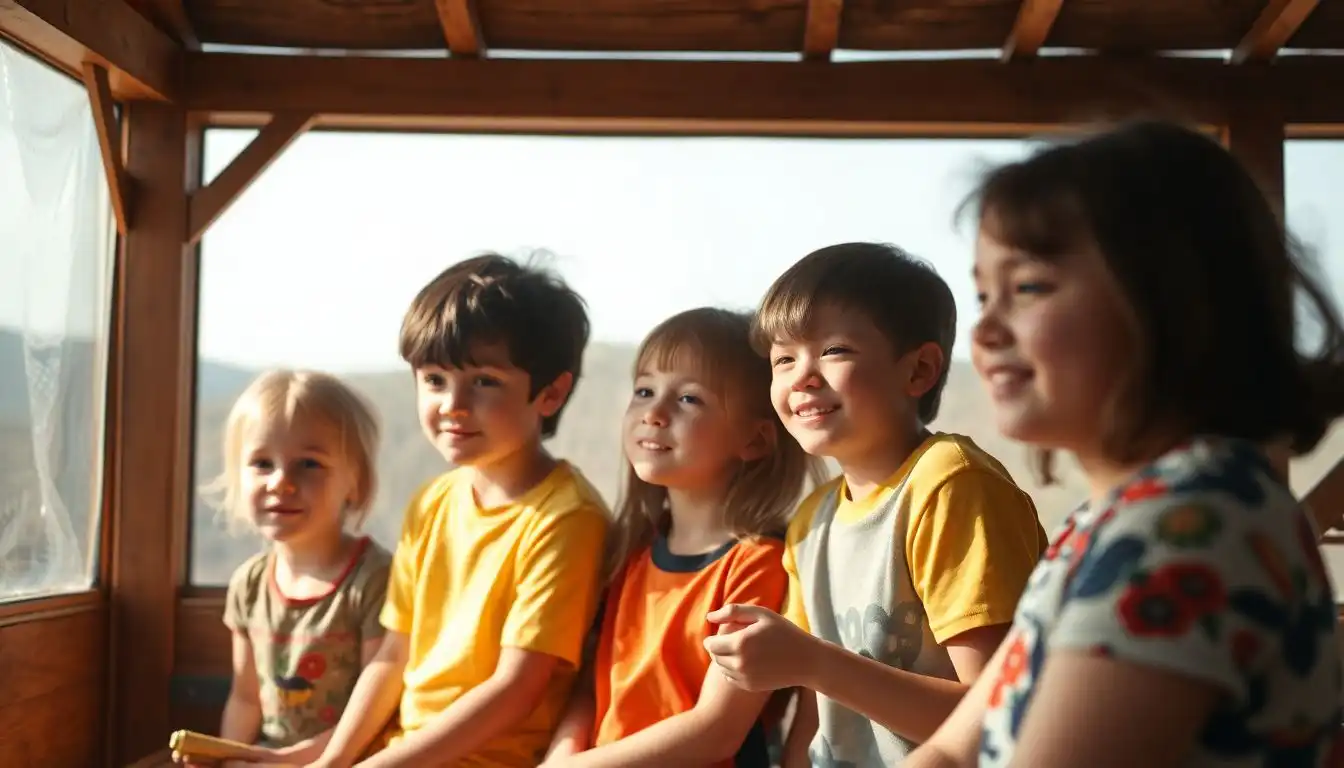
Emotional durability in the 1960s and 70s: Recent sociological observations suggest that the mid-20th century created a uniquely resilient demographic. This generation was forged not through meticulous guidance, but through a hands-off approach that mandated independence from a very young age.
While modern parenting prioritizes safety and emotional validation, the era of the Latchkey Kid relied on a different set of rules. Children were often left to their own devices, navigating a world that offered very little supervision and even less protection from minor failures.
This lack of constant adult intervention forced children to develop a psychological thickness. They learned to navigate social hierarchies, resolve conflicts, and manage boredom without a digital or parental safety net, creating a foundation of grit that remains visible decades later.
The Architecture of Benign Neglect
The term “benign neglect” describes a style of upbringing where parents provided basic needs but allowed children to govern their own social lives. In the 1960s and 70s, this wasn’t seen as a failure of parenting but as a cultural standard.
Mothers and fathers of that era often viewed their roles as providers rather than emotional coaches. Once a child finished their chores or schoolwork, they were frequently told to “go outside and play” until the streetlights came on, leaving them in charge of their own time.
This absence of oversight meant that every scraped knee or social rejection had to be handled internally. Children couldn’t run to a screen or a helicopter parent for immediate relief, which inadvertently built a high threshold for frustration.
Self-Regulation and the Power of Boredom
Boredom is often viewed as a negative state in the modern era, yet it served as a primary developmental tool for children fifty years ago. Without the constant stimulation of the internet, kids had to use their imagination to fill the void.
Creative play was born out of necessity rather than guided activities. Finding a way to turn a cardboard box into a fortress or a group of neighborhood kids into a sports team required organizational skills that many adults struggle with today.
Emotional self-regulation was the byproduct of these long, unsupervised hours. When a group of children had a disagreement, they had to negotiate a solution themselves or the game would simply end, providing a practical lesson in social compromise.
“The absence of immediate adult intervention during childhood disputes allowed for the natural development of conflict-resolution skills. Children learned that their social survival depended on their ability to regulate their tempers and find common ground with peers.”
Developing Emotional Calluses
In the 1970s, the world was not “child-proofed” in the physical or emotional sense. Playground equipment was made of steel and set on asphalt, reflecting a broader societal mindset that minor injuries were part of growing up.
Psychologists suggest that these small, manageable stresses acted like an emotional vaccine. By facing low-stakes failures and physical scrapes, children developed emotional calluses that protected them against more significant traumas later in life.
Modern comfort has largely removed these friction points, meaning today’s youth often hit adulthood without having practiced the art of bouncing back. The generation raised in the 60s and 70s had already failed a thousand times before they ever held a full-time job.
The Statistics of Independence
The shift in lifestyle between the 1970s and today is most evident when looking at the mobility and freedom granted to young people. The following data highlights how much the daily experience of childhood has transformed over the decades.
| Developmental Factor | 1960s-1970s Reality | Modern Day Comparison |
|---|---|---|
| Unsupervised Time | High (approx. 4-6 hours daily) | Low (approx. < 1 hour daily) |
| Physical Mobility | High (walking/biking miles alone) | Low (adult-escorted travel) |
| Conflict Resolution | Peer-led negotiation | Adult-led mediation |
| Risk Exposure | Moderate to High | Extremely Low |
Mastering the Art of Problem-Solving
When a bicycle broke in 1972, the child was usually the primary mechanic. They had to figure out how to put the chain back on or patch a tire using whatever tools were available in the garage, often through trial and error.
This mechanical aptitude translated into a broader cognitive framework for problem-solving. It instilled a sense of agency, the belief that a person has the power to influence their own circumstances rather than waiting for an external authority to fix a situation.
The psychological benefit of this agency is a reduction in anxiety. When an individual knows they can handle a crisis, the fear of the unknown diminishes, resulting in a more stable and resilient adult personality.
The Social Dynamics of the Streetlight Era
Socializing in the mid-20th century was an exercise in raw human interaction. There were no “unfriend” buttons or curated digital profiles; there was only the neighborhood hierarchy which required constant navigation.
To be part of the group, a child had to be reliable and useful. If they were too sensitive or refused to follow the group’s rules, they were socially isolated until they learned to adapt, which taught them the value of community and resilience.
This “tribal” upbringing meant that by the time these individuals reached the workforce, they possessed a high degree of social intelligence. They could read body language and subtle social cues that are often lost in text-based communication.
“Resilience is not an innate trait but a learned response to environmental pressure. The generation that grew up without modern safety nets developed a resilient psychological framework because the environment demanded it for basic social inclusion.”
The Cost of Modern Overprotection
While current parenting techniques have successfully reduced physical accidents and improved literacy rates, they may have inadvertently stunted emotional growth. The desire to protect children from every discomfort has created a “fragility gap.”
Without the opportunity to steer their own lives during childhood, many young adults feel overwhelmed by the complexities of the modern world. They have the intellectual tools but lack the emotional toughness that comes from surviving benign neglect.
The 1960s and 70s were not perfect, and many children faced hardships that should not be repeated. However, the accidental result of that era’s hands-off parenting was a generation that views obstacles as puzzles to be solved rather than insurmountable barriers.
Why This Resilience Persists Into Adulthood
The habits formed in childhood tend to stay for a lifetime. Those who learned to self-soothe in the 1970s are the same adults who today can navigate corporate restructuring or personal loss with a steady hand.
They possess a “figure it out” mentality that is becoming increasingly rare. This isn’t because they are inherently smarter, but because their internal hard drive was programmed at a time when help was not just one click away.
This emotional durability serves as a stabilizer in times of economic or social upheaval. It provides a historical perspective that reminds them they have survived worse conditions, which naturally lowers their overall stress levels in high-pressure environments.
The Balance Between Safety and Independence
Looking back at the 1960s and 70s offers a blueprint for how we might reintroduce healthy risk into modern life. It’s not about ignoring children, but about providing them the space to experience minor failures without immediate interference.
The goal is to foster a sense of self-reliance early on. By stepping back, parents can allow their children to develop the calluses needed to handle the friction of adult life, much like the generations that came before them.
While society cannot go back to a world without digital tethers, it can encourage a mindset that values independence. True emotional strength is grown in the gaps where the adults aren’t looking, where a child is left to decide who they want to be in a difficult moment.
“The most durable individuals are those who were allowed to fail when the stakes were low. This early exposure to adversity creates a roadmap for future success that no amount of theoretical instruction can replace.”
FAQs – Emotional durability in the 1960s and 70s
What exactly is benign neglect in parenting?
It refers to a style where parents provide for a child’s essential needs—like food, shelter, and medical care—but allow them significant freedom to manage their own social lives, play, and problem-solving without constant supervision.
Why did children in the 70s have more emotional calluses?
They faced frequent small-scale challenges, such as physical minor injuries or social rejection, without adult intervention. Overcoming these obstacles repeatedly hardened their emotional response, making them less reactive to stress as adults.
Did the lack of technology help build resilience?
Yes, the absence of digital entertainment forced children to combat boredom through creativity and social interaction. It also prevented the “escape” from reality that modern devices provide, requiring children to face and resolve their problems in real-time.
How did unsupervised play contribute to problem-solving?
Without a coach or parent to referee, children had to invent their own rules and negotiate disputes. This built cognitive flexibility and taught them how to navigate complex social structures independently.
Can modern children develop this same level of durability?
It is possible if parents consciously create “protected risks.” This involves allowing children to wander, fail at tasks, and resolve their own peer conflicts without immediate adult mediation to mimic the developmental pressures of the past.
Is resilience different from being “tough”?
Yes, while toughness can imply a lack of emotion, resilience is the ability to recover quickly from difficulties. The 60s and 70s generation learned to process negative emotions and move forward, which is a key component of long-term mental health.
What role did the neighborhood play in this development?
The neighborhood acted as a training ground. Children were part of a wide peer group of varying ages, which taught them how to emulate older kids and mentor younger ones, broadening their social and emotional skill sets.